



6 Backpack and Storage Box Hacks to Stay Adventure-Ready

You've just returned from a weekend shoot. Your camera backpack is still half-full on the living room floor. Your drone case sits in the car. Random cables and memory cards scatter across your condo's kitchen counter.
Sound familiar?
Plot twist: The problem isn't that you have too much gear. You're treating every backpack like temporary storage instead of building a real system.
The fix? Two simple rules: Your backpack handles what you carry today. Your storage boxes protect everything you need ready but not right now. When these two work together, decluttering stops being a chore and starts being automatic.
Don't let the everyday grind dull your spirit. Your gear deserves a system that keeps your passion alive and ready to go, not buried in bags you never fully unpack.
Hack #1: Separate What You Carry From What You Store

When your backpack becomes permanent storage, you're carrying dead weight. Literally and mentally.
Your backpack should hold only what you use this week. Everything else needs proper storage in dedicated storage boxes to protect your investments.
-
This week's gear → Backpack (camera you're using, laptop, immediate accessories, daily essentials)
-
Backup equipment → Storage box (extra lenses, backup laptop chargers, portable hard drives, seasonal gear, older equipment)
-
Between adventures → Storage box (camping gear, diving equipment, range supplies, extra tech accessories)
A backpack carrying only essentials beats one stuffed with “just in case” items every single time. Keep your backpack light, and you'll feel the relief immediately. Research shows that decision fatigue increases when we carry excess options with us. Your body and mind both pay the price.
Your backpack handles movement. Your storage box handles protection. Stop making one do both jobs.
Hack #2: Assign Each Backpack a Purpose (and Give It a Home)
Your camera backpack shouldn't moonlight as your gym bag. One bag, one mission.
Give each backpack a specific role:
-
Content creator backpack: Camera body, two to three lenses, batteries, memory cards → Has a home in a storage box with extra equipment
-
Outdoor day pack: Water, first aid, quick snacks, light jacket → Returns to storage box with camping gear
-
Range/tactical bag: Essential safety gear, ammunition, range tools → Stored in a larger outdoor storage box with bulk supplies
After each trip, your packed backpack goes into its designated storage box. Next trip? Just grab the box, pull out the bag, and go. No repacking from scratch. No living room chaos. No "where did I put that lens cap?" panic at 5 a.m.
When your backpack knows where it lives, you're not digging through three bags to find one battery charger. Purpose-driven packing starts with purpose-driven storage.
Hack #3: Use Storage Boxes as Your Gear's Home Base

Your backpacks move. Your storage boxes stay organized.
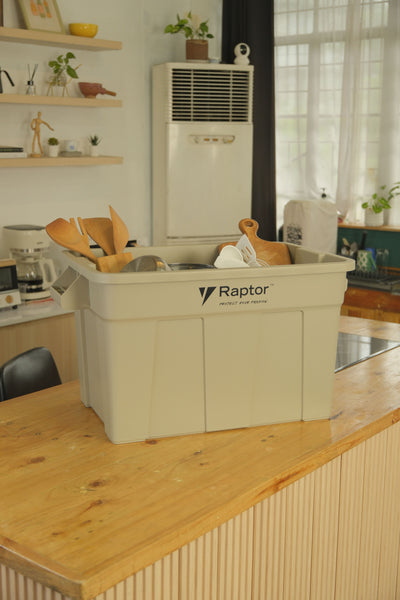
Storage bins hold everything that doesn't need to travel with you daily:
-
Backup gear: Extra camera bodies, backup lenses, duplicate tools
-
Seasonal equipment: Camping gear between trips, diving equipment, mountain versus beach gear
-
Refills and accessories: Batteries, memory cards, cables, cleaning supplies, spare parts
A 23.6-inch by 15.4-inch footprint handles three 50-liter boxes stacked vertically. That's 150 liters of storage in the space of one box. For gear facing rough conditions, outdoor storage boxes with weatherproof seals keep humidity, dust, and moisture out.
Stack smart: Put frequently grabbed gear in the top box for easy access. Medium-use items go in the middle. Rarely touched equipment stays on the bottom. (Yes, this means you'll actually remember you own that extra wide-angle lens.)
You don't need a bigger apartment—just storage that protects your passion and maximizes the space you have, vertically.
Hack #4: Pack Once, Store Smart
Pack your camera backpack for a shoot. When you're done, return it fully packed to its storage box. Next shoot? Grab the box, pull the bag, verify batteries. Done in two minutes.
The benefits stack up fast:
-
Faster prep: No repacking from scratch every Friday evening.
-
Nothing missing: Gear stays with its designated bag.
-
Less daily clutter: Backpacks don't live on your floor between trips.
Your 28-liter backpack fits inside a 50-liter storage box with room for extra batteries and accessories. Size up to 70-liter boxes when you need more space for bulkier gear.
Your weekend shoot doesn't start Friday at 6 p.m. when you begin packing. It starts now, because your camera bag is ready, protected, and waiting in its box.
Hack #5: Build a Mobile Storage System (Backpack + Box + Vehicle)

Friday traffic is bad enough without deciding what gear goes where in your trunk.
Build a three-layer system:
-
Backpack layer: Quick-access items you'll use immediately (day pack, camera bag, range kit)
-
Storage box layer: Bulk equipment, backup gear, protected items (camping setup, extra lenses, tactical supplies)
-
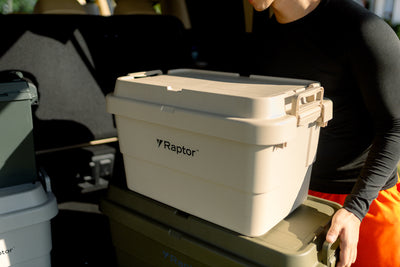
Vehicle layer: Secure everything with tie-downs, maximize vertical space with stacking
(Because nothing kills adventure vibes faster than realizing your tent poles are buried under your gym bag and yesterday's groceries.)
Unsecured cargo becomes dangerous projectiles during sudden stops or accidents. Proper cargo securing isn't just organization. It's safety.
Group gear by activity in separate storage bins. One box for camping. One for shooting. One for content creation. Need only your camera gear this weekend? Grab the creator backpack from its box, leave the camping box at home. Five-minute load time.
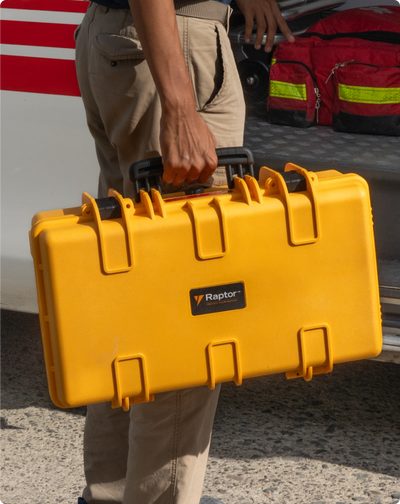
Outdoor storage boxes come tie-down ready, preventing shifting on mountain roads. Weatherproof seals protect gear from dust on unpaved routes. Stackable design maximizes SUV and pickup bed vertical space.
Your adventure starts the moment you're ready to go, not when you finish packing. Protect your gear and your spontaneity with a system that moves as fast as you do.
Hack #6: Choose Storage That Grows With Your Gear
You'll upgrade your backpack when your hobby grows. Your storage system should stay solid.
Start with two to three boxes for core activities. Add more as hobbies grow. Impact-resistant material means these boxes outlast your gear, not the other way around.
The same storage bins that organize your condo work in your vehicle and at outdoor sites. Cross-environment flexibility means one system handles all your adventures. (Bonus: You only need to learn one organizational method instead of juggling three different systems.)
For the hobbyist in all of us, start with what you need now and build a system that grows with your passions. Purposeful storage for purposeful pursuits.
See the System in Action: Real Adventures, Real Solutions
The Condo-Dwelling Content Creator

Sarah creates product videos for local brands. She lives in a 30-square-meter condo where storage space is tight. Her camera backpack holds her daily setup. But her backup lenses, extra batteries, lighting equipment, and microphones? They stay organized in two stacked storage boxes in her spare closet corner.
When she books a bigger shoot, she pulls her camera bag from the first box, grabs extra gear, and loads both into her car. Friday shoots mean five minutes of prep, not 45 minutes of hunting through drawers.
The Weekend Outdoor Hobbyist

Miguel hits the shooting range on Saturdays and camps on Sundays. His tactical range bag stays packed inside a 70-liter box in his pickup bed, tied down, weatherproofed, ready. His camping backpack sits in a second 70-liter box at his condo.
Friday evening? Grab the camping box, transfer it to the truck next to the range box, done. No mixing ammunition with tent stakes. No forgetting essentials. No wondering why his sleeping bag smells like gun oil.
The Organized Household

The Torres family shares a two-bedroom condo with two kids. Each kid has their own day pack for weekend activities: one for art supplies, one for beach trips. Both backpacks go in 74-liter boxes stacked on their balcony, along with seasonal gear.
When it's time for the beach, they grab the beach backpack from its box, throw in fresh towels, and go. The system stays clean because everything has a home (And nobody's tripping over beach toys in the hallway anymore).
Weatherproofing and Long-Term Care
High humidity and expensive equipment are a bad combination in the Philippines. Nobody wants to open their gear box and find out their camera grew a science experiment.
The culprits? Mold on lenses, fungus on sensors, and electronic component failure. According to camera equipment experts, proper moisture control prevents these costly repairs and extends equipment life.
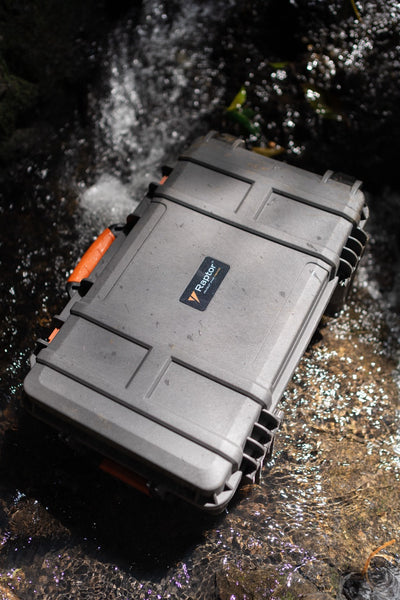
Fully enclosed weatherproof outdoor storage boxes keep moisture out. Add silica gel packets for extra electronics protection. These simple steps protect your investments without turning storage into a full-time job.
Protecting a ₱80,000 camera setup with weatherproof storage isn't an expense. It's insurance.
Your gear stays ready for the next adventure, rain or shine.
Carry What You Need. Store the Rest Properly.
Your backpack carries what you need today. Your storage box protects everything that makes your adventures possible.
3 Decluttering Hacks You Can Start Today
-
The backpack audit: Empty your main backpack completely. Sort items into "use this week" and "store until needed." Only the first pile goes back in the bag. The rest needs a storage box.
-
Assign homes: Pick one backpack, designate its purpose, and find it a storage box home. After each use, the bag returns to its box, fully packed and ready.
-
Vertical space calculator: Measure your current floor space used for gear storage. Three 50-liter storage boxes stacked vertically use the same floor space as one box but give you triple the capacity.
Organized storage does more than keep things tidy. It keeps you ready for what's next. Beyond decluttering, that's protecting your passion.


No comments yet. Be the first to leave one!
Leave a Comment